I've been sitting on public domain collections of Hitchcock for a while now. One of my brothers, who seems to forget this every year, buys them for me at Christmas. Hopefully, I've nipped this in the bud, but I still have more than enough of them. The quality of the transfers is wildly variable, as you might expect, but they're watchable for the most part (I'll get to that further on). As I was watching Young and Innocent and Blackmail this week, I kept hearing Andre De Toth's dismissal of Hitchcock in Hollywood ("He got fat and lazy"--well, he was ALWAYS fat). I began to understand just what he meant.
Young and Innocent (1937) is an early variation on Hitchcock's "man wrongly accused on the run" movies, following on The 39 Steps a couple of years earlier. It's certainly energetic. Of the early British Hitchcock movies, this is the one that seems most like his Hollywood movies. Clearly, he had become a prestige director by this time, and the higher budget is on full display in two sequences: in the mine cave-in, which seems an arbitrary disaster like the plane crash in Foreign Correspondent; and the famed overhead shot of a ballroom that comes to rest four inches from the eyes of the killer (it's almost a reversed version of the final shot of the shower scene in Psycho, the one that dollies back from Janet Leigh's staring eye). But in a lot of ways, this movie isn't like Hitchcock's Hollywood films at all. Visually, it's loaded with quaint excressences the likes of which Hitchcock would strip out of his later movies, and some sequences show the director clinging to the visual shorthand of his silent movies.
Blackmail (1929) is a true sound/silent hybrid, and shows Hitchcock at his most inventive. There's a bold dynamism in his shot compositions and editing scheme in the silent portions of the film, and a kind of remarkable frankness in the sound material that would go underground during the director's long tenure laboring under the Production code. Hitchcock provides no title cards for the silent portions, but he doesn't need them (compare this to Rich and Strange, in which the sound portions are punctuated with title cards, perhaps tongue in cheek). With this film's climax, we find the first instance of the director staging mayhem in or near a monument as a means of contrasting order and chaos, a trope rumored to have been suggested to Hitchcock by Michael Powell. Unfortunately, the disc pixilated into a storm of digital noise at the end of the movie. The problem with the public domain is that you often get what you pay for, or, more accurately, when you pay peanuts, you get monkeys.
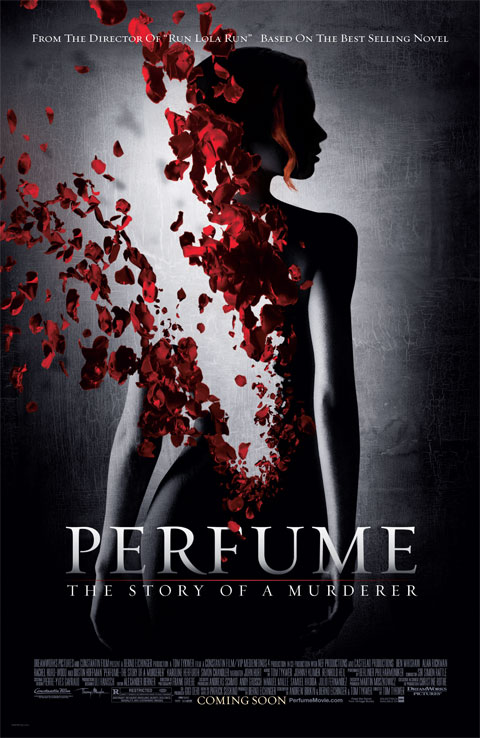
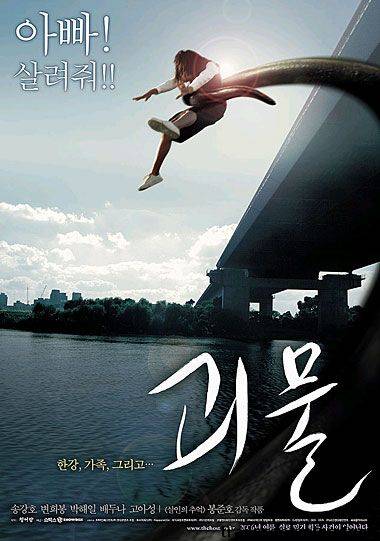
I was reading a lament that the art of the movie poster was lost. While I can certainly understand this sentiment, I think there are still movie posters being made today that stand with the best posters of yesteryear. Two of my favorites are from horror movies made last year.
I love, love, love this poster for
Perfume: The Story of a Murderer:
I love, love, love this poster for
The Host:
But this may be my favorite horror movie poster. It's for
The Texas Chain-Saw Massacre 2:
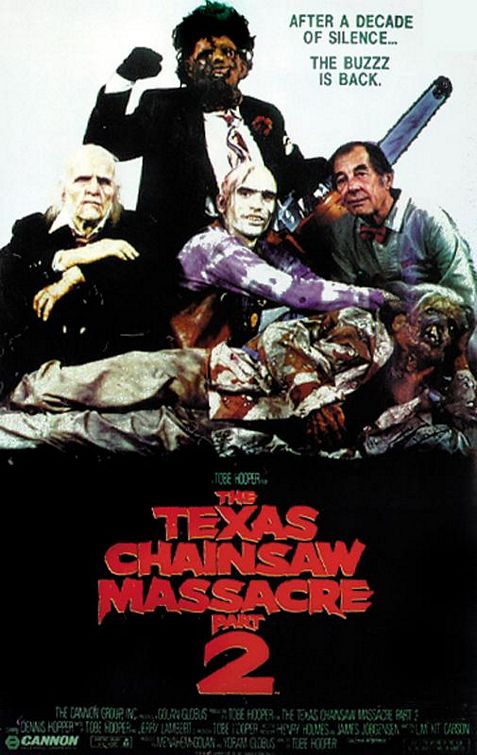
Which bears an uncanny resmblance to this poster from a beloved teen comedy from around the same time:
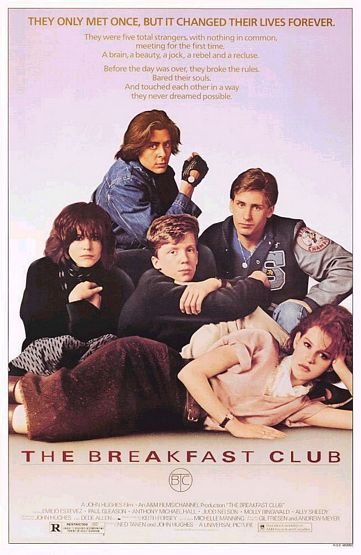
Priceless.









 Posts
Posts

